Contract staffing, also known as temporary staffing, is a practice where an organization hires employees for a limited period of time to fulfill specific business needs.
This model of employment has been around for decades and has gained popularity in recent years due to the flexibility it provides to employers and employees alike.
In this article, we’ll take a closer look at what is contract staffing, how it works, and the benefits it offers.
The job market has evolved significantly in recent years, with many companies shifting towards more flexible employment models. Contract staffing has emerged as a popular option for organizations looking to fill temporary staffing needs while avoiding the commitment of permanent hires.
Table of Contents
What is Contract Staffing?
Contract staffing is a practice where an organization hires employees on a contractual basis to fulfill specific roles or projects for a limited period of time.
Unlike permanent employees, contract employees are not entitled to the same benefits, such as health insurance and paid time off.
They are typically paid a higher hourly rate to compensate for the lack of benefits and job security.
How Does Contract Staffing Work?
Contract staffing typically involves a staffing agency that recruits and hires employees on behalf of client organizations. The staffing agency handles the administrative tasks associated with employment, such as payroll, taxes, and benefits. The client organization pays a fee to the staffing agency for each employee they hire, and the staffing agency in turn pays the employee’s wages and benefits.
Types of Contract Staffing
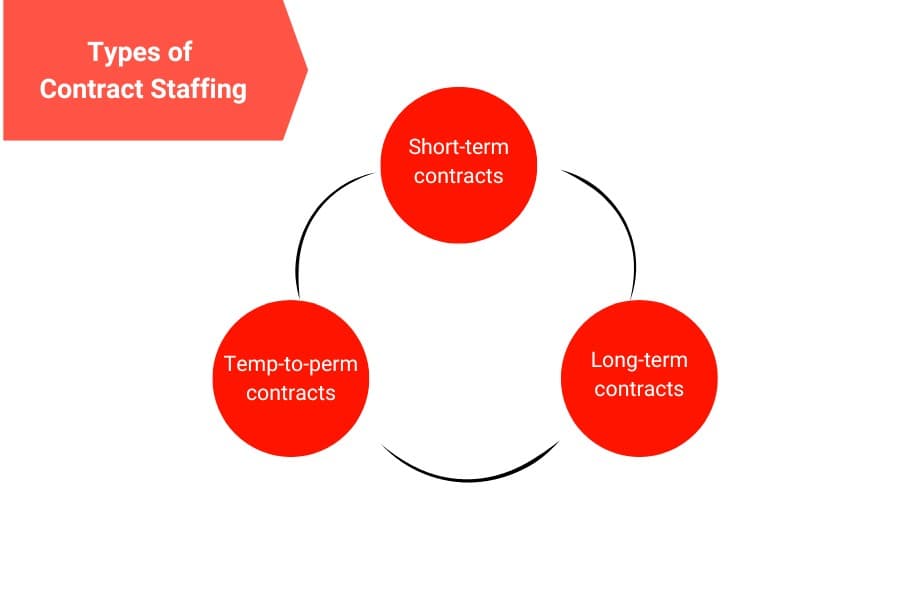
There are several types of contract staffing, including:
- Short-term contracts: These contracts typically last for a few weeks to a few months and are often used to fill temporary gaps in staffing or to complete short-term projects.
- Long-term contracts: These contracts can last for several months to several years and are often used to fill ongoing staffing needs or to complete longer-term projects.
- Temp-to-perm contracts: These contracts allow employers to evaluate an employee’s performance before offering them a permanent position.
Benefits of Contract Staffing
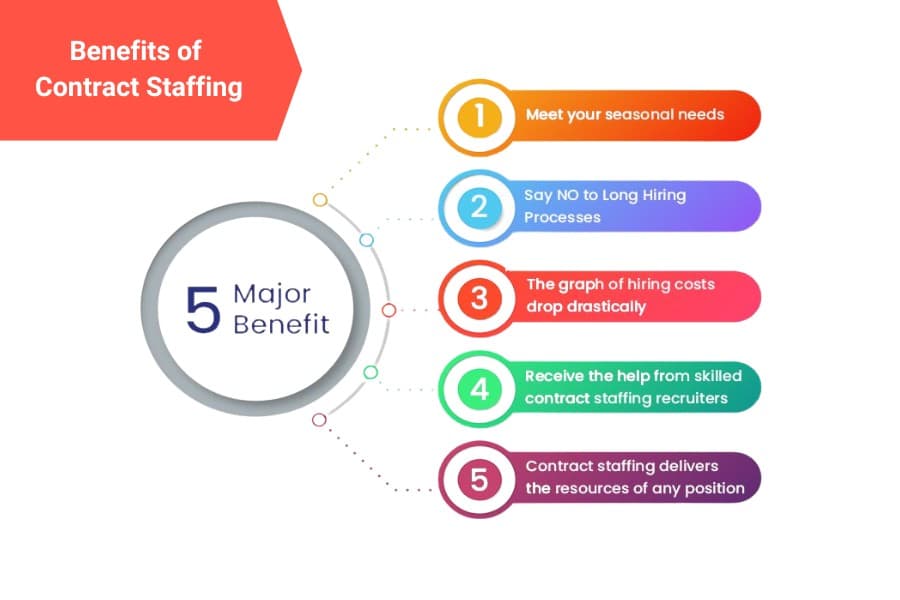
Flexibility
Contract staffing provides employers with flexibility in managing their workforce. They can quickly scale up or down depending on business needs without the commitment of permanent hires. This allows them to manage their budgets more effectively and respond quickly to changing market conditions.
Cost-Effective
Contract staffing can be more cost-effective than hiring permanent employees, especially for short-term projects or roles. Employers don’t have to pay for benefits or other overhead costs associated with permanent employees, such as office space or equipment.
Reduced Risk
Contract staffing reduces the risk of hiring the wrong person for a permanent position. Employers can evaluate an employee’s performance before offering them a permanent position, reducing the risk of costly hiring mistakes.
Access to Specialized Skills
Contract staffing allows employers to access specialized skills and expertise without having to hire a permanent employee. This is particularly useful for projects that require specific technical or industry knowledge.
Improved Productivity
Contract staffing can improve productivity by allowing employers to bring in additional staff during peak periods or when they need specialized skills. Employers can bring in additional staff during peak periods or when they need specialized skills.
This allows them to handle increased workloads without overburdening their permanent staff, which can lead to burnout and decreased productivity. By utilizing contract staffing, employers can ensure that projects are completed on time and to a high standard, ultimately improving their bottom line.
Challenges of Contract Staffing
- Lack of job security for contract employees.
- Potential for misclassification of employees as independent contractors.
- Increased administrative burden for employers working with staffing agencies.
- Difficulty in maintaining company culture and team cohesion when working with a temporary workforce.
Best Practices for Contract Staffing
- Clearly define the job responsibilities and expectations for contract employees.
- Establish clear communication channels between the client organization and the staffing agency.
- Treat contract employees with the same respect and professionalism as permanent employees.
- Monitor the performance of contract employees and provide feedback to the staffing agency.
Contract Staffing vs. Permanent Staffing
While both contract staffing and permanent staffing have their advantages, there are some key differences to consider. Contract staffing offers greater flexibility and cost savings, but may not provide the same level of job security or benefits as permanent employment.
| Attributes | Permanent staffing | Contract staffing |
|---|---|---|
| Length of Employment | Long-term, typically indefinite | Short-term, fixed duration or project-based |
| Employee Benefits | Generally receive full benefits | May receive limited or no benefits from employer |
| Employer Costs | Higher costs due to benefits and long-term commitment | Lower costs due to limited duration and benefits |
| Hiring Process | Often involves a rigorous and lengthy process | Can be a quicker and simpler process |
| Job Security | Generally more job security | Generally less job security |
| Skill Set Required | Requires specialized skills and experience | May require specialized skills but often more flexible |
| Management | Managed by the employer | Generally self-managed with minimal oversight |
Future of Contract Staffing
The trend towards more flexible employment models is expected to continue, with contract staffing playing an increasingly important role in the job market. As technology advances and more work is done remotely, contract staffing is likely to become even more prevalent, allowing employers to access specialized skills and expertise from anywhere in the world.
FAQs: What is Contract Staffing and its Benefits
What is contract staffing?
Contract staffing refers to hiring employees for a specific period of time, usually to work on a project or to fill a temporary vacancy.
How is contract staffing different from permanent staffing?
Contract staffing is a temporary arrangement, whereas permanent staffing involves hiring employees for a long-term position. Contract employees typically have fixed-term roles and may not receive the same benefits as permanent staff.
What are the benefits of contract staffing for employers?
It allows employers to quickly fill temporary vacancies, offers flexibility in staffing levels, and provides cost savings on benefits and payroll taxes. It's also an excellent way to evaluate talent before offering permanent roles.
What are the benefits of contract staffing for employees?
Contract staffing provides employees with the opportunity to gain experience in different industries and work on diverse projects. It also offers flexibility and the potential to earn a higher salary than a permanent employee.
How are contract staffing agencies involved in the process?
Contract staffing agencies find qualified candidates, handle recruiting, screening, and hiring, and manage payroll and benefits for the contracted employees on behalf of the client organization.
What types of positions are typically filled through contract staffing?
Contract staffing is commonly used to fill positions in IT, engineering, finance, healthcare, and other specialized fields where project-based expertise is needed.
What is the typical duration of a contract staffing assignment?
The duration varies based on the employer's needs and project nature. Assignments can range from a few weeks to several months or even years.
How is the compensation for contract staffing determined?
Compensation is typically based on the employee's skills, experience, and the demands of the project or temporary vacancy. It may be hourly, daily, or weekly.
Can contract staffing lead to permanent employment?
Yes, in some cases, contract staffing can lead to permanent employment (temp-to-perm) if the employer decides to offer a permanent position based on performance.
What are some common challenges associated with contract staffing?
Common challenges include maintaining productivity among temporary staff, managing turnover, and ensuring contracted employees are properly trained and integrated into the organization.
Final Words: What is Contract Staffing in Recruitment
Contract staffing is a popular employment model that offers several benefits to both employers and employees. It provides employers with flexibility, cost savings, and access to specialized skills. While there are some challenges to consider, following best practices can help employers maximize the benefits of contract staffing.